

How to Pose Confidently in Every Portrait
That moment when the camera comes up can make even the most accomplished woman wonder what to do with her hands. You may feel perfectly at home in your body until someone asks you to stand still and be photographed. Learning how to pose confidently is not about memorizing model poses or changing who you are. It is about understanding a few simple principles, then allowing your expression, strength, and story to take up space.
A beautiful portrait does not require perfection. It requires presence. Whether you are stepping into a boudoir session, celebrating a milestone birthday, documenting motherhood, or updating your professional headshot, the goal is the same: to create images that feel like the most radiant, powerful version of you.
Start With the Truth: You Do Not Have to Know What to Do
Many women arrive for a portrait experience with one nervous confession: “I am awkward in photos.” Usually, that is not true. What they mean is that they have been left to figure it out alone in front of a camera.
Confident posing is guided. A skilled photographer watches the light, your posture, your facial expression, and the tiny adjustments that make a significant difference. A lowered shoulder, a softened hand, a shift of weight, or a chin moved slightly forward can transform the feeling of an image. You are not expected to walk in knowing your angles. You only need to be willing to be directed.
Let go of the idea that there is one correct body type, age, or personality for portraits. The best pose is one that honors the woman in front of the camera. A dramatic, editorial stance may feel incredible for one person; a relaxed seated pose may better reveal another woman’s warmth and confidence. Both can be breathtaking.
How to Pose Confidently Starts With Your Posture
Posture is not about standing rigidly tall. In fact, stiffness is one of the fastest ways to feel disconnected from your portrait. Think length, not tension.
Imagine a gentle string lifting the crown of your head toward the ceiling. Let your shoulders settle down and back without forcing them. Then place your weight primarily into one hip or one leg rather than distributing it evenly between both feet. This creates a natural curve through the body and gives your pose movement.
For standing portraits, avoid facing the camera squarely unless the photographer is intentionally creating a bold, powerful look. Turning your body slightly while bringing your face back toward the lens often feels more relaxed and creates shape. Keep a small amount of space between your arms and torso when possible. That separation lets the body read clearly in a photograph without requiring you to hold an unnatural position.
Your breath matters here. Before each series of images, breathe in slowly, exhale, and let your jaw relax. Confidence looks far more like ease than effort.
Give Your Hands a Job
Hands are often the first place nerves show up. When they are left hanging with no purpose, they can feel awkward. Instead, give them a graceful role in the image.
You might lightly touch your collarbone, rest fingertips along your thigh, adjust the edge of a jacket, hold your waist, or bring a hand into your hair. The key is softness. Think of your fingers as extending energy rather than gripping. Avoid pressing your palms flat against the body or clenching your hands into fists unless you are creating a deliberate, stronger editorial mood.
For boudoir portraits, hands can create intimacy and shape by tracing the curve of a shoulder, hip, or leg. For headshots, they may rest naturally at your sides, cross loosely in front of you, or interact with a blazer. For maternity images, hands placed with intention around your belly can make the pose feel protective, connected, and deeply personal.
Use Movement Instead of Freezing
A photograph is still, but you do not need to be. Some of the most natural images happen between poses, while you are slowly changing position, laughing, looking away, or settling into a new expression.
Try a gentle sway from one hip to the other. Roll one shoulder back. Slowly turn your face from the window toward the camera. Run your fingers through your hair, then pause. Take one step forward, stop, and shift your gaze. These small movements prevent the body from locking up and give your photographer a range of beautiful, authentic moments to capture.
Movement is especially helpful if you tend to overthink. Instead of asking yourself, “Do I look good?” give yourself one physical cue: “Breathe,” “lengthen,” “soften,” or “turn.” A clear cue brings you back into your body and out of your inner critic.
Let Your Face Tell the Story
A confident expression is not always a big smile. Your portrait should reflect the feeling you want to remember.
For a polished professional headshot, confidence may look like a relaxed mouth, direct eye contact, and a slight lift through the chest. For glamour photography, it may be a softer gaze, parted lips, or an expression that feels playful and self-assured. For a milestone portrait, a genuine laugh can be far more memorable than a practiced smile.
If you struggle with a camera-ready smile, do not force one. Think of someone you love, a recent achievement, or a moment when you felt completely proud of yourself. Let the thought reach your eyes first. The face follows emotion more beautifully than it follows instruction.
It also helps to release your mouth between frames. Press your lips together lightly, then relax them. This reduces tension and keeps your expression from becoming fixed. A photographer may ask you to look just above the lens, down toward your shoulder, or past the camera. Those shifts are not random. They create variety and help your face feel alive.
Dress for How You Want to Feel
The right wardrobe does not have to be trendy or revealing. It should help you feel supported, elevated, and unmistakably yourself.
For a headshot, choose an outfit that fits beautifully through the shoulders and reflects the level of authority you want to project. For glamour or boudoir, consider pieces that celebrate your favorite features and allow you to move comfortably. A fitted dress, bodysuit, flowing robe, structured blazer, or simple black lingerie can all photograph beautifully when they make you feel powerful.
Bring options if you can. A change of neckline, jacket, or accessory can shift the mood of a portrait without changing who you are. The trade-off is that too many choices can create decision fatigue, so select a few intentional looks rather than packing your entire closet.
Beauty styling can also help you arrive feeling cared for rather than rushed. Professional hair and makeup are not about covering you up. They are about translating your natural beauty for the camera, where light can soften details that feel more visible in person.
Trust Direction, Then Make It Your Own
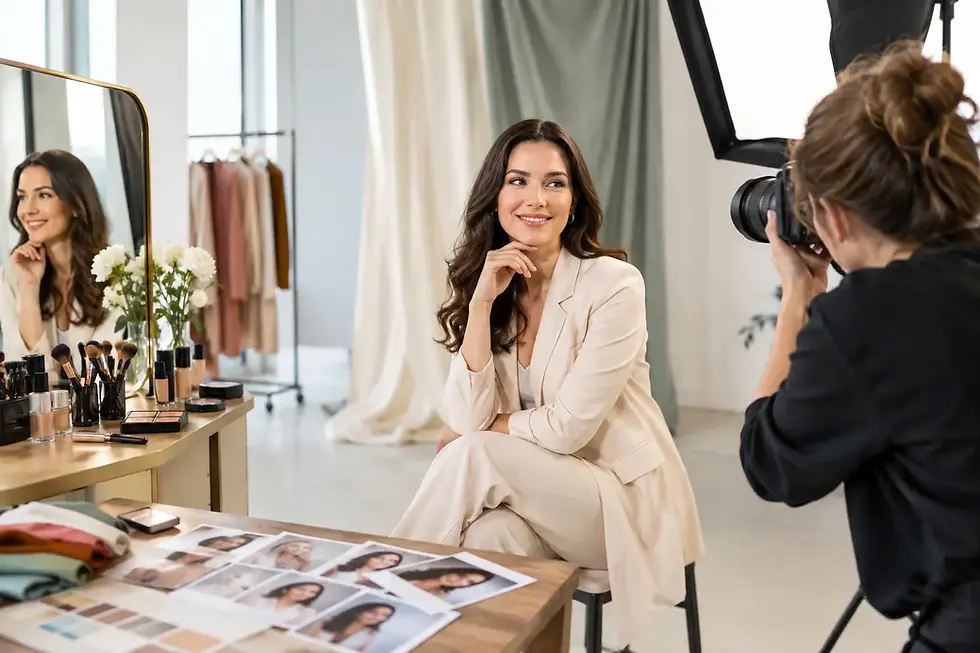
The strongest portrait sessions balance expert guidance with personal expression. Your photographer may position your body down to the angle of a wrist, especially at the beginning. That precision creates a foundation. Once you feel comfortable, your own personality starts to come through in the way you laugh, hold your shoulders, make eye contact, and inhabit the space.
At Studio 121 Boutique, the experience is designed so you never have to perform confidence before you feel it. You are guided through each pose in a private, affirming setting, with room to settle in, experiment, and see yourself differently.
Speak up during your session, too. If a pose feels strained, say so. If you love one side of your face, share it. If you want images that feel sensual, commanding, joyful, soft, or all of the above, name that intention. Great portraits are a collaboration, and your comfort is part of the artistry.
Practice the Feeling, Not the Pose
You can practice before your session, but keep it simple. Stand in front of a mirror for a few minutes and notice how your body feels when you shift your weight, lengthen through your spine, or turn slightly to the side. Pay attention to the expressions that feel most like you. The goal is familiarity, not critique.
On the day of your portrait session, give yourself permission to arrive exactly as you are. Nerves do not disqualify you from feeling beautiful. They simply mean the experience matters.
Confidence is rarely the feeling you must bring to the camera. More often, it is the feeling you leave with after allowing yourself to be seen.


Comments