

How Private Are Portrait Sessions? What to Expect
The question is rarely just, “Will someone see me in lingerie?” When women ask how private are portrait sessions, they are often asking something deeper: Will I be safe to relax? Will I be judged? Who will handle my images? Can this experience truly belong to me?
You deserve clear answers before stepping in front of a camera. A luxury portrait session can be deeply personal, whether you are creating boudoir images, celebrating a birthday, honoring your body after motherhood, or claiming a new chapter in your life. Privacy is not an extra. It is part of the foundation that allows confidence to take the lead.
How Private Are Portrait Sessions, Really?
The honest answer is that privacy depends on the studio, its space, its team, and its policies around images. A thoughtful portrait experience should never leave you guessing about who may be present, where you will change, how images are stored, or whether your photos could be shared.
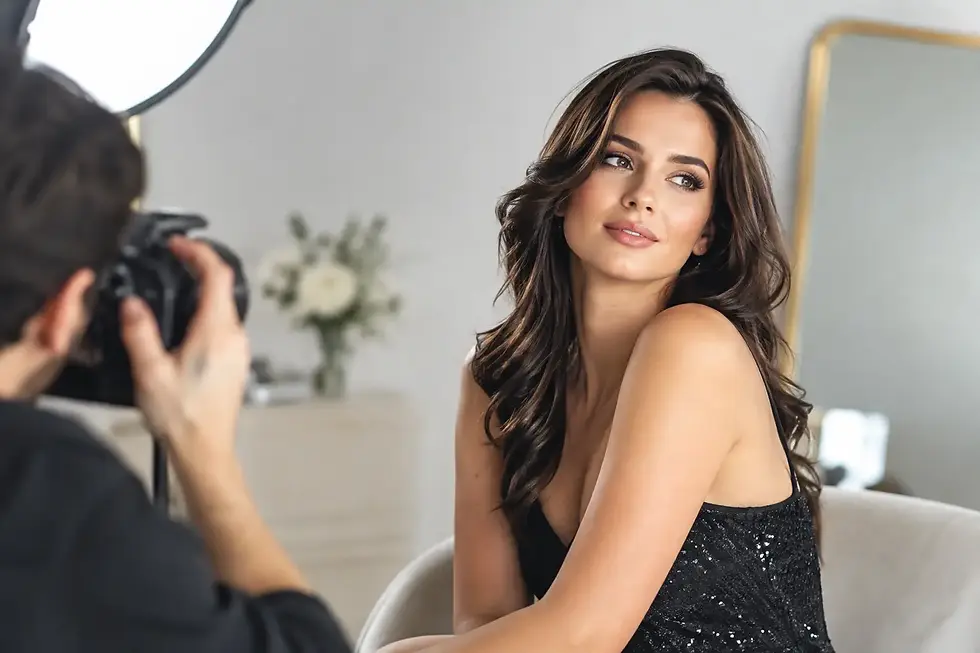
At a boutique studio, privacy begins with the feeling of the room. You should not be navigating a busy retail floor, changing behind a flimsy curtain, or performing confidence for strangers. A one-to-one studio environment gives you room to arrive as you are, take a breath, and let the experience unfold without an audience.
For many women, that difference changes everything. The first few minutes may feel vulnerable, especially if this is your first boudoir session or the first time you have been professionally photographed in years. A private, guided setting makes it easier to move past self-consciousness and into the version of yourself you came to celebrate.
Privacy in the studio space
Ask whether your appointment is exclusive or whether other clients, photographers, assistants, or vendors may be moving through the space. There is no single right setup for every studio, but you should know what to expect before you arrive.
A private changing area is essential. So is clarity about who will be in the room during hair and makeup, styling, and photography. Some clients feel most comfortable with a female photographer and an all-female team. Others are happy with a small trusted crew as long as everyone is introduced and their role is clear. Your comfort is the standard, not something you should have to earn.
At Studio 121 Boutique, the experience is built around personal direction in an intimate, female-led setting. That means you are not expected to know how to pose, perform, or become someone else. You are supported through the process with expert guidance designed to bring out your strength, sensuality, and radiance.
Your Images Should Never Be Shared by Assumption
A beautiful portrait can feel like a private love letter to yourself. It can also become part of a larger legacy: an album for you, a gift for a partner, a statement piece for your home, or a polished headshot that represents your professional authority. The choice is yours.
Before your session, ask the studio directly how it handles image sharing. Specifically, find out whether social media posts, website galleries, printed samples, testimonials, before-and-after features, or marketing use require a signed release. A professional studio should treat permission as a conversation, not an assumption.
You may be thrilled to share your portraits. You may want every image kept entirely private. You may be comfortable sharing one close-up but not boudoir images, or you may prefer to wait until you have seen your gallery. All of those boundaries are valid.
Consent can be specific. You can ask to approve individual images before they are posted, decline permission for certain categories of photographs, or say no to all public use. If your circumstances require extra discretion because of your career, family situation, public profile, or personal history, mention that early. A respectful photographer will welcome the information and help create a plan that honors it.
Ask about storage and access
Digital photography makes it easy to preserve images, but it also makes it reasonable to ask how they are protected. Your photographer may not be able to promise a world without risk, especially when digital files are involved, but they should be able to explain their process clearly.
Ask who has access to the files, where galleries are hosted, whether online galleries use passwords, and how long images are retained. If you are purchasing prints, albums, or wall art, ask how orders are packaged and whether the studio communicates discreetly. These are practical questions, not awkward ones.
Privacy also includes your own choices after the session. If you download files, consider where they are saved, who shares your devices, and whether you want images backed up to a shared cloud account. For some clients, a printed album is more private and more meaningful than keeping intimate portraits on a phone. For others, digital access is essential. There is no universal answer, only the option that makes you feel secure and empowered.
What Privacy Feels Like During a Session
A private session is not silent or stiff. It is a space where you can laugh, take your time, adjust an outfit, and ask for what you need without feeling rushed or watched.
You can request breaks. You can decide an outfit no longer feels right. You can say that a pose is outside your comfort zone and ask for another option. Great direction does not pressure you into exposure. It gives you choices that flatter your body, honor your boundaries, and help you see yourself with fresh eyes.
This matters most in boudoir and glamour photography, where trust is part of the artistry. You do not need to arrive feeling fearless. Many women walk in nervous, convinced they are not photogenic, too old, too curvy, too inexperienced, or simply not ready. The right portrait experience does not dismiss those feelings. It creates enough safety for you to move beyond them.
Privacy is also emotional. A photographer may see you at a tender moment: after a divorce, before a wedding, during pregnancy, on a milestone birthday, or after years of putting everyone else first. You should feel met with warmth and professionalism, never curiosity, judgment, or pressure to explain your story.
Questions Worth Asking Before You Book
A consultation is the right time to get specific. You do not need a legal script or an apology. A few direct questions can tell you whether the studio is the right fit:
Will my appointment be private, and who will be present during my session?
Is there a private place to change, get ready, and store my belongings?
Do you share client images online or in print, and do I have to sign a release?
Can I approve images individually or keep all of my portraits private?
How are my gallery, files, and finished products handled after the session?
Listen not only to the answers, but to how they are delivered. You want a photographer who responds with clarity and care, not someone who makes your questions feel inconvenient. Luxury is attention to detail, and your peace of mind is one of those details.
Privacy Lets You Be Fully Seen
The purpose of a portrait session is not to make you fit a narrow idea of beauty. It is to preserve a version of you that deserves to be remembered: powerful, soft, sensual, accomplished, joyful, or all of the above.
When you know the space is private, your boundaries will be respected, and your images are yours to control, you have more freedom to let go. That is when the camera can capture something more than a pose. It can capture presence.
Choose a studio that makes privacy part of the experience from the first conversation. Then give yourself permission to take up space, celebrate the woman you are, and create portraits that feel like your own private proof of beauty and power.


Comments